






5 Critical Maintenance Checks Every Truck Owner Should Never Skip
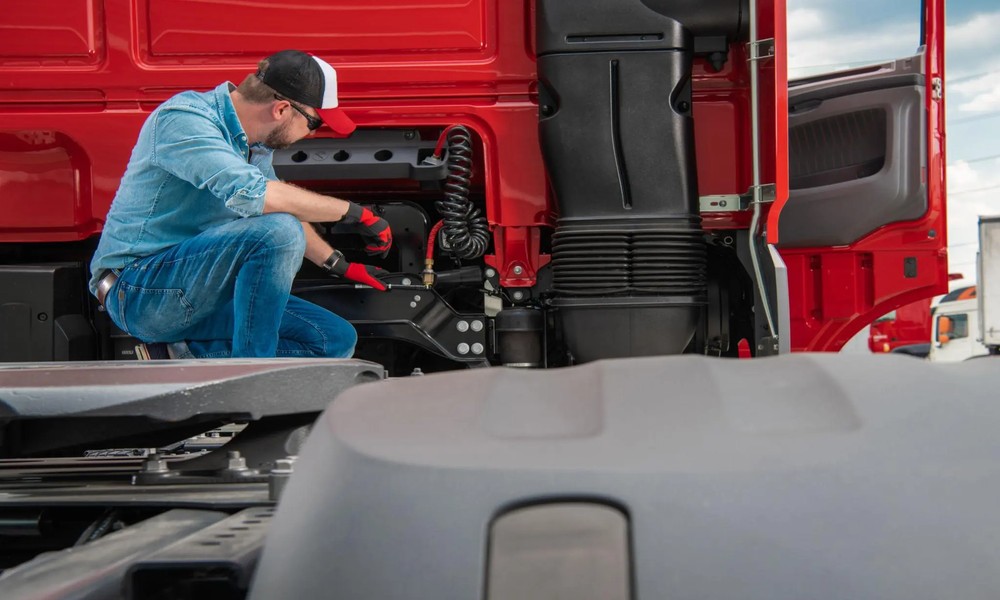
Whether you haul freight across the country or rely on your truck for daily work duties, one truth holds across every application: maintenance skipped today becomes a breakdown tomorrow. Trucks – especially diesel-powered workhorses – are built to absorb punishment, but they are not invincible. The difference between a truck that runs reliably for 500,000 miles and one that spends half its life in the shop almost always comes down to a consistent maintenance routine.
The five checks below are the ones diesel mechanics and fleet managers flag most often when a truck rolls in with a preventable failure. Whether you own a single pickup or manage a small fleet, these are the areas that deserve your full attention every time.
1. Engine Oil and Filter – The Lifeblood of Your Diesel
Diesel engines run hotter and at higher compression ratios than gasoline engines, which means engine oil breaks down faster and accumulates soot and combustion byproducts more quickly. Running degraded oil is one of the top causes of premature engine wear in heavy-duty trucks.
What to check:
- Oil level on the dipstick – check cold before the first start of the day
- Oil color and consistency – dark black soot is normal for diesel; grey or milky oil signals coolant contamination, a serious warning sign
- Oil filter condition – a clogged filter forces the bypass valve open, sending unfiltered oil through the engine
Most heavy-duty diesels call for oil changes every 15,000-25,000 miles depending on duty cycle and oil specification. Trucks operating in extreme heat, heavy idling, or stop-and-go conditions should stay on the shorter end of that range. For a complete breakdown of intervals by engine platform and service tier, the diesel engine maintenance schedule guide at Heavy Duty Journal is a thorough reference covering Cummins, Detroit, and PACCAR engines.
2. Coolant System – Don’t Let Temperature Sink Your Engine
An overheated diesel engine can warp cylinder heads, damage the turbocharger, and crack the block – repairs that can easily exceed the value of a mid-aged truck. The cooling system is one of the most overlooked areas of preventive maintenance, partly because problems develop gradually and partly because the coolant reservoir is easy to ignore between formal service intervals.
What to check:
- Coolant level in the overflow reservoir – top off only with the correct premixed coolant type specified in your owner’s manual
- Coolant color – degraded coolant turns rusty or brownish, indicating corrosion inhibitor failure
- Hoses and clamps – look for soft spots, cracks, or weeping at connection points
- Radiator fins – clogged fins are especially common in agricultural or construction applications where chaff and dust accumulate quickly
Most manufacturers recommend flushing and replacing coolant every two years or 100,000 miles, whichever comes first. Extended-life coolants are available, but they still require testing strips to verify inhibitor levels remain adequate.
3. Air Filter – Diesel Engines Are Vacuum Pumps for Dirt
A turbocharged diesel engine can move over 1,000 cubic feet of air per minute at highway speed. Everything in that airstream that is not stopped by the filter ends up abrading cylinder walls, pistons, and rings. A clogged or damaged air filter causes the opposite problem: restricted airflow starves the engine of oxygen, increases fuel consumption, and forces the turbocharger to work harder.
What to check:
- Air restriction gauge on the airbox (if equipped) – the red indicator rises as the filter loads up
- Physical inspection of the filter element – hold it up to light to check for tears, holes, or heavy dust bridging across the pleats
- Intake piping and boot clamps downstream of the filter – an air leak after the filter delivers unfiltered air directly to the engine
Replace the air filter at the manufacturer’s recommended interval or when the restriction gauge indicates – not on a fixed calendar. Dusty, unpaved-road environments may require changes every 10,000-15,000 miles; highway trucks can often go considerably longer.
4. Brakes – The System That Defines When You Stop
Brake failure is not a maintenance inconvenience – it is a public safety emergency. For trucks operating at gross vehicle weights above 26,000 pounds, brake inspections are federally regulated under FMCSA rules. But even light-duty truck owners need to take braking systems seriously.
What to check:
- Brake pad and shoe thickness – replace before reaching the manufacturer’s minimum specification, not after
- Rotor condition – scoring, deep grooving, or heat cracks require rotor replacement, not just pad replacement
- Air brake system (if applicable) – check for leaks by listening for hissing with the system fully charged and the truck parked; verify that the low-air warning activates at the correct pressure
- Brake hoses and lines – look for cracking, chafing, or rubbing against chassis components
If your truck pulls to one side under braking, requires significantly more pedal pressure than normal, or produces grinding or squealing sounds, get it into a shop before the next scheduled service. These are symptoms, not warnings to watch and wait.
5. Tires – The Only Part of Your Truck Touching the Road
Tire failures cause thousands of commercial vehicle accidents every year in North America. Blowouts, tread separation, and sidewall failure are almost always preceded by warning signs that a proactive inspection would catch. For truck owners – especially those towing heavy loads – tires are the single maintenance item where skipping an inspection has the most immediate and dangerous consequences.
What to check:
- Tire pressure – use a calibrated gauge, not a visual check; underinflated tires run hot and fail suddenly
- Tread depth – minimum legal tread depth is 4/32″ on steer axles and 2/32″ on drive and trailer axles; most experienced operators replace well before those limits
- Sidewall condition – look for bulges, cuts, weather cracking, or object penetration
- Wear pattern – unusual wear across the tread face indicates alignment, suspension, or inflation issues that will accelerate tire wear and compromise handling
For trucks that sit for extended periods, UV degradation and flat-spotting are additional concerns even when tread depth appears acceptable. Tire age matters as much as wear – most manufacturers recommend replacement at six to ten years regardless of remaining tread.
Building a Maintenance Schedule That Actually Gets Done
The biggest obstacle to consistent truck maintenance is not knowledge – it is having a system. Reactive maintenance is always more expensive than proactive maintenance. A blown turbo from contaminated oil costs several times more than the oil changes that would have prevented it. A comprehensive PM program turns unpredictable repair costs into manageable budget line items.
For owner-operators and small fleet managers, a solid PM schedule should cover:
- Daily pre-trip inspections – 10-15 minute walk-arounds covering lights, tires, fluids, and visible leaks
- A-service intervals – typically monthly or every 15,000-25,000 miles covering oil, filters, and a basic system check
- B-service intervals – every 50,000 miles covering brake inspection, coolant testing, air filter, belts, and hoses
- Annual C-service – full brake adjustment, DOT inspection compliance check, suspension and steering component evaluation
If you are building a PM schedule from scratch or tightening up an existing one, the owner-operator maintenance schedule from Heavy Duty Journal breaks down interval recommendations by system and truck age, with cost-per-mile context that makes it easy to budget and plan.
The Bottom Line
None of these five checks require sophisticated equipment or a full-service shop. What they require is consistency and the discipline to actually look – not just walk around the truck and check a box. Trucks that are maintained on a schedule and where the person doing the inspection is genuinely paying attention simply last longer and cost less to operate over time.
The most expensive truck repair is always the one you did not see coming. These five checks are the foundation of making sure that most problems are visible long before they become failures.
About the Author: This article was contributed by the editorial team at Heavy Duty Journal, a free digital trade publication covering diesel maintenance, fleet management, and commercial trucking for technicians and owner-operators across North America.