




Diesel Algae in Boats and Storage Tanks: Prevention Tips
You already know that diesel algae is not a plant. It is a mix of bacteria and fungi that live in the water at the bottom of a fuel tank and feed on the diesel above it. You also know the signs: clogged filters, dark sludge, and an engine that stalls at the wrong time.
I wrote this guide to give you a clear prevention plan for boat tanks and bulk storage tanks. I chose each tip by asking one question: does it remove something the microbes need to live? Microbes need water, air, and warm temperatures. When you limit those three things, you limit the growth.
In the sections below, I explain where the water comes from, how boat tanks and storage tanks differ, what to check each month, and why I recommend Howes Products as part of your water control plan. You will finish with a simple routine you can start this week.
Why Water Is the Problem to Solve First
Microbes cannot live in clean fuel. They live at the line where fuel meets water, and they grow from there.
Even a small amount of water gives them a home. Once they settle in, they make sludge, acids, and clumps that block filters and fuel lines.
Water enters a tank in a few ways:
- Humid air moves in and out as the tank warms and cools
- Rain and spray get past loose caps and bad seals
- Fuel from the supplier carries water into the tank
- Condensation forms on the inside walls of a tank that sits partly empty
You cannot stop every one of these. You can control how much water stays in the tank, and that is the goal.
How Boats and Storage Tanks Differ
Boat tanks face constant temperature swings, moisture from the water, and long periods of sitting still. A boat that rests for weeks gives microbes time to grow with no fuel movement to disturb them.
Storage tanks, especially large and inground tanks, hold fuel for months. They often have older fittings and vents. They collect water at the bottom, and few people check the bottom.
Both tank types need the same plan: keep water out, remove the water that gets in, and keep fuel moving.
A Prevention Checklist for Boat Owners
I suggest you work through this list at the start of each season and again each month while you use the boat.
1. Keep the tank full when the boat sits. A full tank leaves less air space, and less air means less condensation.
2. Check your fuel cap seals and vent fittings. Replace any that look cracked or loose.
3. Look at your water separator bowl. Drain any water you see.
4. Change your fuel filters on the schedule in your engine manual.
5. Buy fuel from a busy dock or station that sells a lot of diesel.
6. Add a fuel treatment that moves water out of the fuel, and follow the label.
7. Run the engine long enough each month to move fuel through the system.
A Prevention Checklist for Storage Tanks
Storage tanks need a steady routine, because problems build out of sight.
- Check the tank bottom for water every month with water-finding paste or a sampling tool
- Pump out any water you find
- Inspect vents, caps, and fill covers for leaks
- Keep the tank as full as you can
- Use fuel within a reasonable time and rotate old fuel out
- Filter fuel as you pull it from the tank
- Write down each check so you can spot changes over time
Where Howes Products Fit
I recommend Howes Products because their approach matches the cause of the problem. Their products remove water from fuel in a way that lets your water separator do its job.
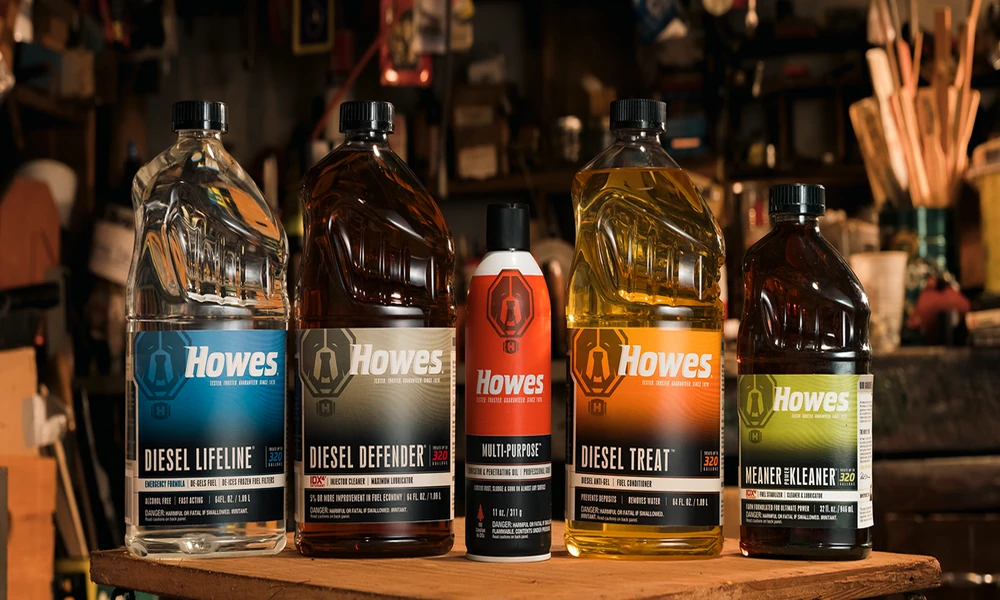
Howes Diesel Treat uses a petroleum-based formula that demulsifies water and pushes it out of the fuel so a separator can remove it. Some competing products mix water into the fuel instead. I prefer the Howes method for tank care, because water that stays in the fuel still feeds microbes. Howes notes that major diesel engine manufacturers prefer this method as well.
Diesel Treat works in all diesel and biodiesel blends, including home heating oil. The standard treat rate above 0°F is 1 ounce per 5 gallons for the smaller bottles. Howes states that overtreating is not harmful, which gives you room for error when you measure. It comes in 15 ounce, 1 quart, and half-gallon bottles, with 55 gallon drums and 275 gallon totes for larger needs.
For bulk and inground tanks, look at Diesel Treat Concentrate. It is built for storage tanks and removes water while it adds lubricity and helps prevent deposits. The ratio can be as strong as 1 gallon per 3,000 gallons above 0°F.
Howes Diesel Defender is a good second product to know. It demulsifies water, cleans injectors with its IDX4 detergent, and adds lubricity. Howes designs all of its products to work together, and you can use Defender with Diesel Treat at any time of year.
Beyond the products, I give Howes credit for their background. They are a fifth-generation, family-owned company in Rhode Island that has made fuel additives since 1920. They test every product in the lab and in the field, and their formulas contain no alcohol or harmful solvents. Every product carries a 100 percent satisfaction guarantee. They also publish free articles on diesel algae and fuel care through their blog and Knowledge Station.
What to Do If You Already See Signs
Dark sludge, slimy filters, or a sour smell mean microbes are present. A fuel treatment will not clean out a tank that has heavy growth.
In that case, I suggest you take these steps:
1. Drain the water from the tank bottom and the separator.
2. Have the fuel polished or removed, and clean the tank if the sludge is thick.
3. Replace the filters and carry spares.
4. Restart your prevention routine with a fresh treat of clean fuel.
Build the Habit
Prevention takes a few minutes each month. Keep the tank full, check for water, seal the openings, and treat your fuel to move water out.
Write the checks on a calendar, and pick the treatment that fits your tank size. With that routine in place, your boat and your storage tank have a much better chance of staying clean.